The Scale of Sports Injury & Athletics Trauma Across the United States
In the United States today, participation in competitive athletics, collegiate programs, professional leagues, and high-intensity recreational fitness is at an all-time high. According to national public health data, more than 8.6 million sports- and recreation-related injuries occur across the USA every single year—spanning youth athletics, NCAA collegiate programs, endurance sports, and professional arenas including football, basketball, soccer, track and field, and cycling.
While ligament tears and concussions often dominate headlines, sports medicine physicians and athletic trainers across America confront a far more frequent daily challenge: acute skin trauma, deep turf burns, high-impact lacerations, blisters, and post-orthopedic surgical incisions that compromise the skin barrier and delay an athlete's return to play.
Turf Burns, Abrasions, and Surgical Incisions in Modern US Sports
Across American stadiums and training facilities, modern playing surfaces and high-velocity contact create severe cutaneous and soft-tissue wounds:
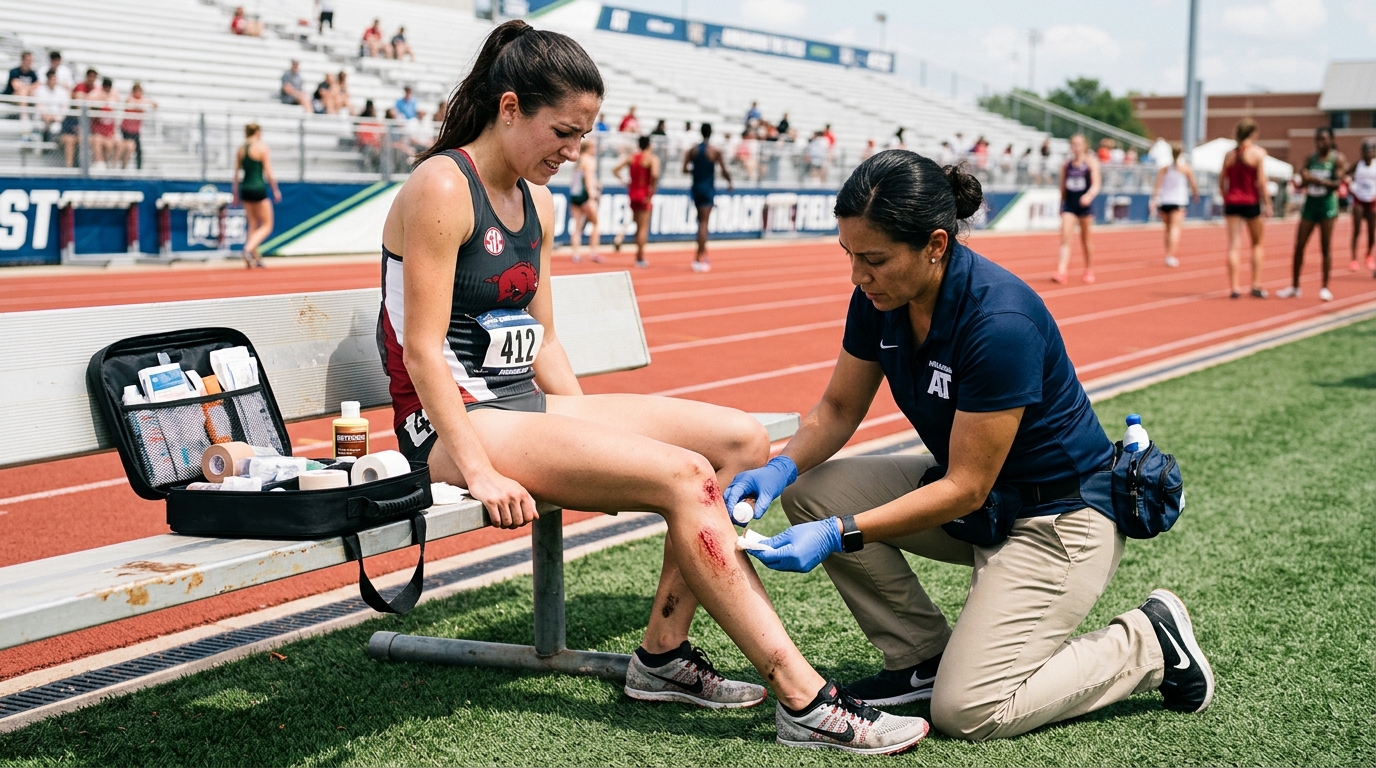
- Artificial Turf Burns & Friction Abrasions: High-speed sliding on synthetic turf generates intense thermal and mechanical friction, stripping away the epidermis and dermis to leave painful, raw wounds across the knees, shins, elbows, and hips.
- Acute Cleat Lacerations & Contusions: Direct contact in football, soccer, hockey, and rugged outdoor athletics frequently causes deep skin tears and crush lacerations that require rapid closure under high mechanical tension.
- Post-Surgical Orthopedic Incisions: Hundreds of thousands of US athletes undergo ACL reconstructions, arthroscopic repairs, and tendon surgeries each year, where incision healing quality and tensile strength directly dictate rehabilitation timelines.
Why Surface Wounds Become a Major Sideline Risk
In competitive US athletics, an open or slowly healing skin wound is more than a minor inconvenience—it represents a serious medical and performance liability:
- Locker-Room & Turf Infections (MRSA): Damaged skin barriers expose athletes to bacterial pathogens such as Staphylococcus aureus and MRSA on shared equipment, mats, and synthetic turf, occasionally escalating into systemic infections or cellulitis.
- Scar Tissue & Restricted Joint Mobility: When deep abrasions or surgical incisions over high-flexion joints (like the knee, ankle, or elbow) heal with fibrotic scar tissue, skin elasticity drops and range of motion is impaired.
- Lost Training & Competition Days: Traditional petroleum ointments, topical antibiotics, and adhesive dressings merely cover the injury passively, leaving the athlete waiting weeks for slow, unassisted re-epithelialization.
A New Breakthrough: ZegeneX Can Heal Sports Injuries Faster
To transform recovery for athletes and active patients nationwide, ZegeneX Therapeutics has developed Zegen-X5, a first-in-class, shelf-stable small-molecule topical therapeutic licensed from the University of Pittsburgh that accelerates natural cellular tissue repair and can effectively heal acute sports injuries, turf burns, lacerations, and surgical incisions.
Translational Innovation from the University of Pittsburgh
ZegeneX Therapeutics is advancing first-in-class small-molecule regenerative wound healing therapeutics licensed from the University of Pittsburgh to eliminate avoidable diabetic amputations worldwide.