
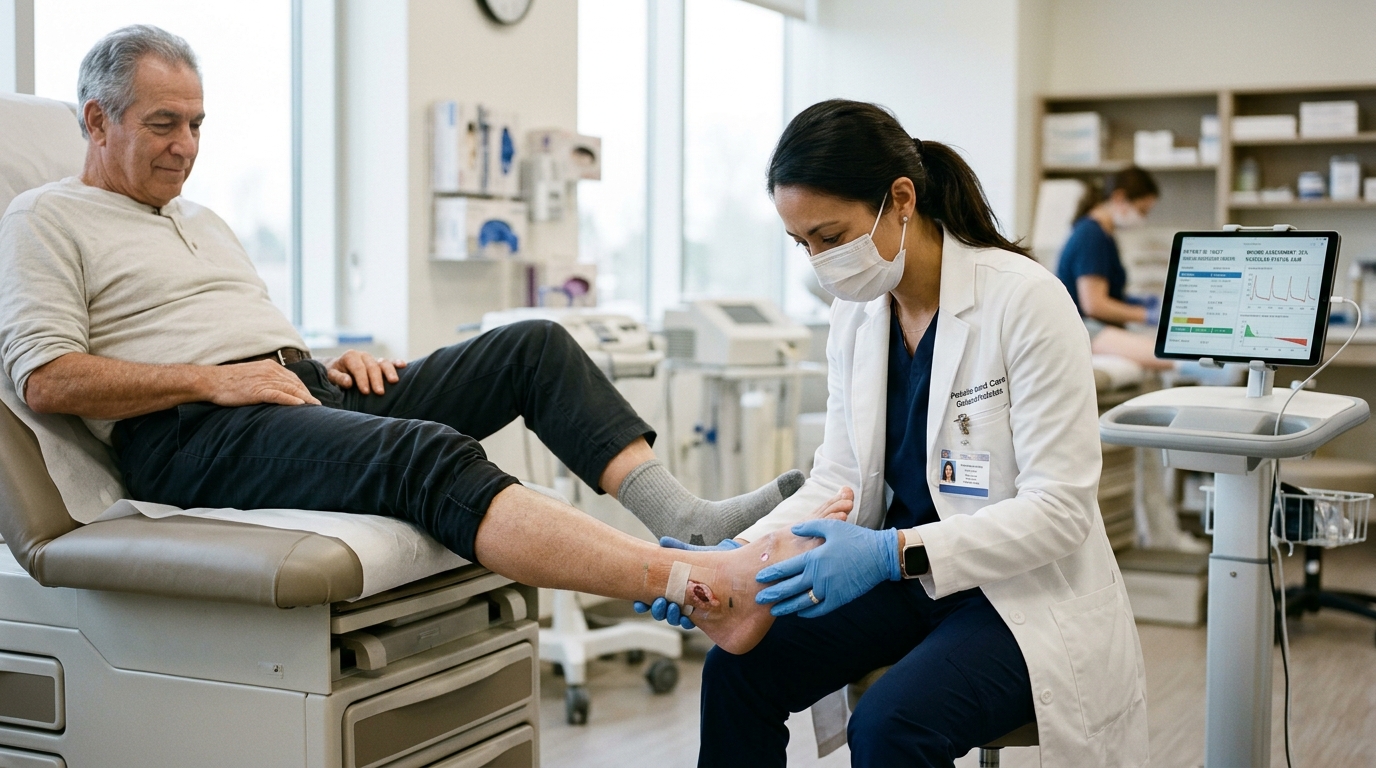
The Reality of Diabetic Foot Ulcers in the United States Today
Across the United States today, diabetic foot ulcers (DFUs) have quietly become one of the most severe and widespread public health challenges in modern medicine. With more than 38.4 million Americans currently living with diabetes—and nearly 98 million adults with prediabetes—chronic complications affecting the lower extremities have reached record levels in US hospitals and outpatient clinics.
Every year, approximately 1.6 million Americans develop a diabetic foot ulcer. Up to 25% to 34% of all people with diabetes in the US will experience a foot ulcer during their lifetime, and more than half of these wounds become clinically infected, leading to emergency room visits, prolonged hospital stays, and osteomyelitis (bone infection).
Why Diabetic Foot Ulcers Are So Difficult to Heal
Unlike normal acute cuts or scrapes, diabetic foot ulcers in US patients often remain open and unhealed for months or even years due to a triad of biological complications:
- Peripheral Neuropathy: Nerve damage caused by chronic high blood sugar eliminates pain sensation in the feet, meaning minor blisters, pressure points, or repetitive trauma go unnoticed until a deep ulcer forms.
- Peripheral Arterial Disease (PAD) & Ischemia: Narrowed blood vessels restrict microvascular blood flow and oxygen delivery to the lower limbs, starving the wound bed of the nutrients required for tissue repair.
- Cellular & Inflammatory Arrest: Inside a diabetic wound, normal cellular regeneration is biologically stalled. Instead of progressing smoothly to tissue closure, the wound remains trapped in chronic inflammation and tissue breakdown.
The Human and Economic Toll Across America
When diabetic foot ulcers fail to close, the outcomes for American families and the healthcare system are devastating:
- 160,000+ Amputations Annually: Roughly 85% of all diabetes-related lower-extremity amputations in the United States are preceded by a non-healing foot ulcer—equating to one American losing a limb every 3.5 minutes.
- High Post-Amputation Mortality: The 5-year mortality rate following a diabetic lower-limb amputation exceeds 50% to 70%, which is higher than the mortality rate of breast cancer, prostate cancer, and Hodgkin's disease.
- Billions in US Healthcare Costs: Direct medical care for diabetic foot ulcers and amputations costs the US healthcare system and Medicare between $9 billion and $13 billion every year, alongside massive losses in workforce productivity and quality of life.
Why Current Treatments Leave Millions Behind
Today, most US wound care centers rely on passive dressings, routine debridement, offloading casts, or expensive biologic therapies that require strict sub-zero refrigeration and repeated hospital visits. Even with these interventions, recurrence rates remain alarmingly high—roughly 40% of patients experience another ulcer within one year of healing, and 65% within five years.
A New Breakthrough: ZegeneX Can Heal Chronic Diabetic Foot Ulcers
To solve this nationwide crisis, ZegeneX Therapeutics has developed Zegen-X5, a first-in-class, shelf-stable small-molecule topical therapeutic born from regenerative biology research at the University of Pittsburgh that releases the cellular brake on stalled wounds and can effectively heal chronic diabetic foot ulcers.
Translational Innovation from the University of Pittsburgh
ZegeneX Therapeutics is advancing first-in-class small-molecule regenerative wound healing therapeutics licensed from the University of Pittsburgh to eliminate avoidable diabetic amputations worldwide.